|
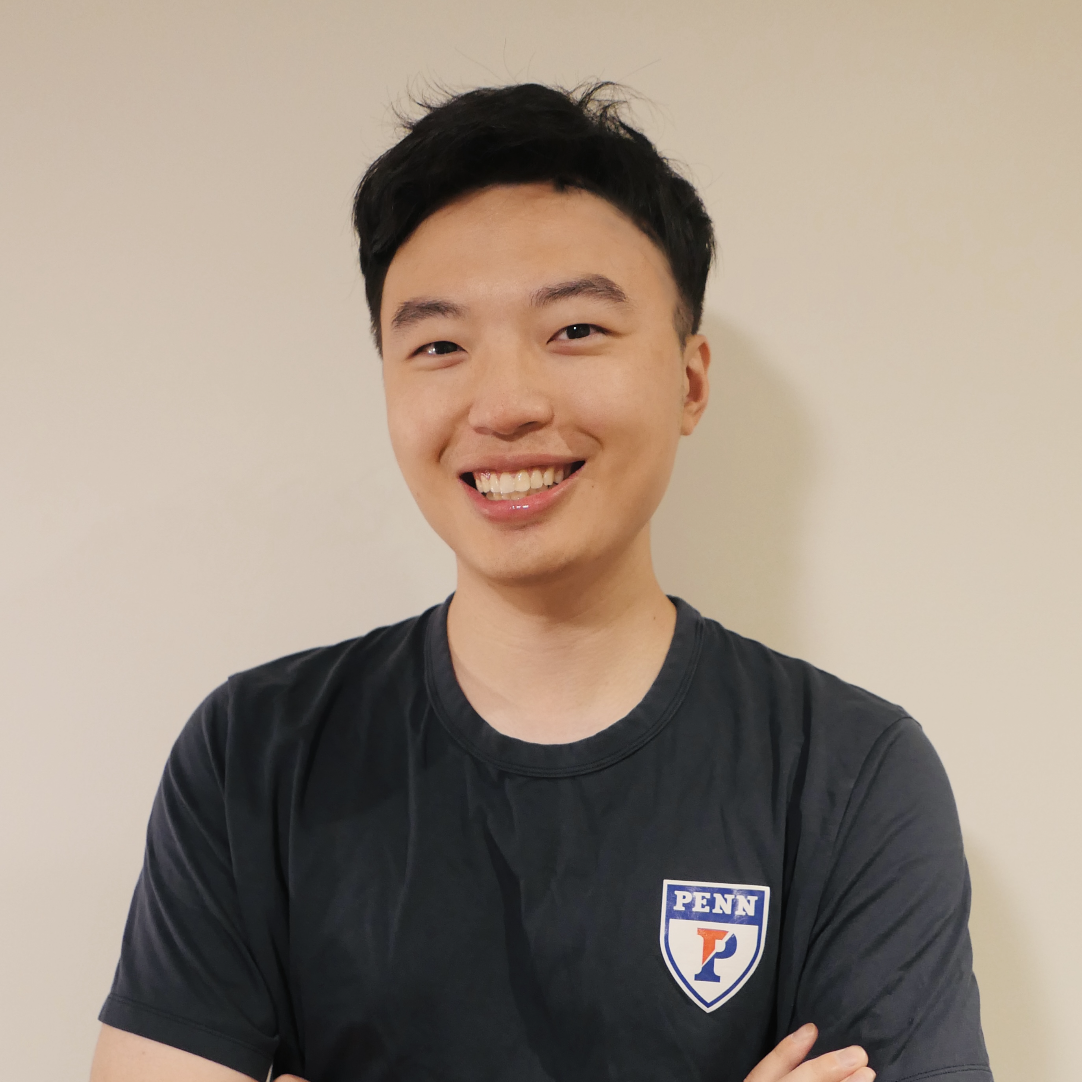
Zhaoze Wang
I am a Ph.D. student at the UPenn GRASP Lab.
I study predictive world models and compact latent representations for multimodal sequence learning,
long-horizon prediction, and planning, drawing inspiration from biological memory and navigation.
I previously interned at Adobe Research, where I worked on video world models,
with a focus on efficient generation and long-horizon prediction.
I am seeking research internships from Summer through Fall 2027,
with availability for a continuous internship across both seasons.
Email /
Google Scholar /
GitHub /
LinkedIn /
X
|
|
Research keywords:
predictive world models
multimodal sequence learning
latent representations
long-horizon planning
autoregressive video generation
linear attention
neuroscience-inspired AI
Selected Publications
|
|
A Simple Model of Co-Emergence of Grid and Place Fields
arXiv preprint, 2026
Zhaoze Wang, Genela Morris, Dori Derdikman,
Pratik Chaudhari,
Vijay Balasubramanian
Paper
/
Project Page
/
GitHub
Recurrent sensory-prediction models learn from masked multimodal histories and egocentric actions.
Across 5,000+ architecture, masking, and noise runs, we study how structured spatial representations
emerge, connecting biological navigation to learned predictive states.
|
|
REMI: Reconstructing Episodic Memory During Internally Driven Path Planning
NeurIPS 2025
Zhaoze Wang,
Genela Morris†,
Dori Derdikman†,
Pratik Chaudhari†,
Vijay Balasubramanian†
Paper
/
Project Page
/
Simulation Suite
/
Vision Encoder
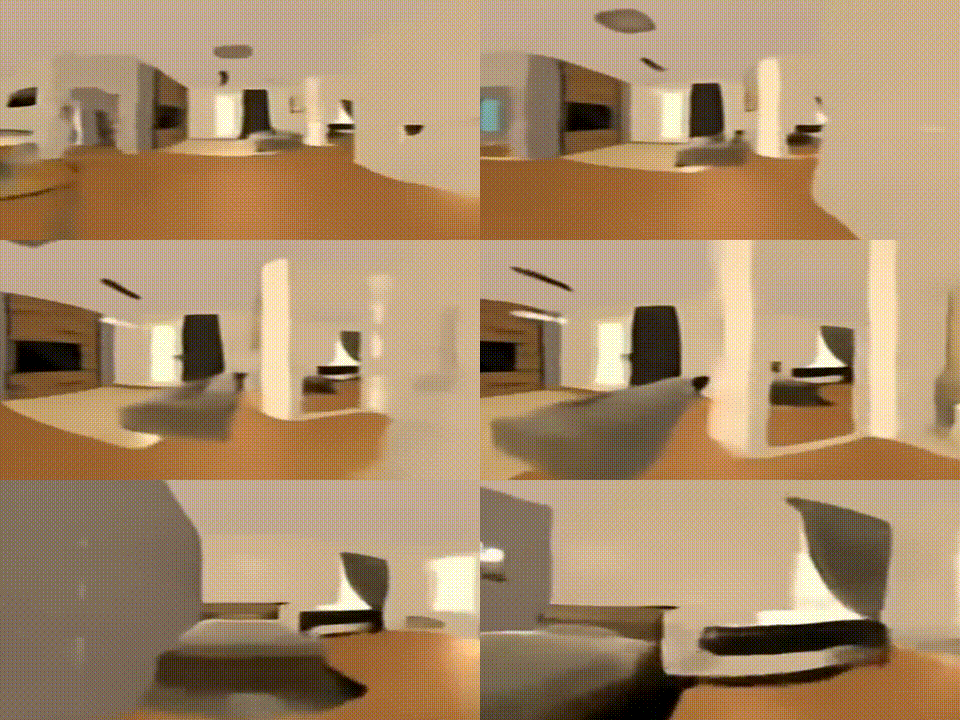
A neuroscience-inspired recurrent world model that binds visual observations to latent spatial states,
retrieves goals from partial cues, and rolls out long-range plans in Habitat-Sim.
Learned local transition dynamics generalize to shortcuts through unseen states and cue-conditioned planning.
ViT-B/L masked autoencoders provide compact visual embeddings, with multi-GPU DDP/AMP rollout and evaluation pipelines.
|
|
Time Makes Space: Emergence of Place Fields in Networks Encoding Temporally Continuous Sensory Experiences
NeurIPS 2024
Zhaoze Wang†,
Ronald W. Di Tullio†,
Spencer Rooke,
Vijay Balasubramanian
Paper
/
Code
/
Video
/
Project Page
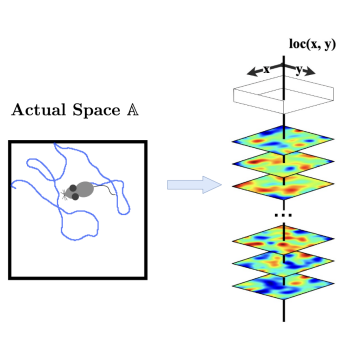
Inspired by biological spatial memory, we show that temporal continuity enables recurrent models
to learn stable environment-specific latent representations and pattern-complete noisy or occluded
sensory trajectories.
See also Trading Place for Space.
|
|
Trading Place for Space: Increasing Location Resolution Reduces Contextual Capacity in Hippocampal Codes
NeurIPS 2024 Oral
Spencer Rooke,
Zhaoze Wang,
Ronald W. Di Tullio,
Vijay Balasubramanian
Paper
/
Video
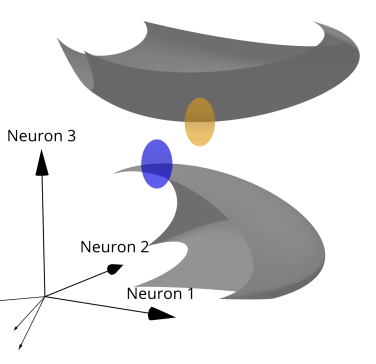
Starting from biological spatial codes, we derive geometric bounds linking spatial resolution,
contextual capacity, and representation dimensionality, characterizing trade-offs in compact
spatial state representations. See also Time Makes Space.
|
Open Source
|
|
BtnkMAE: Compact and Decodable Visual Representations
Source Code
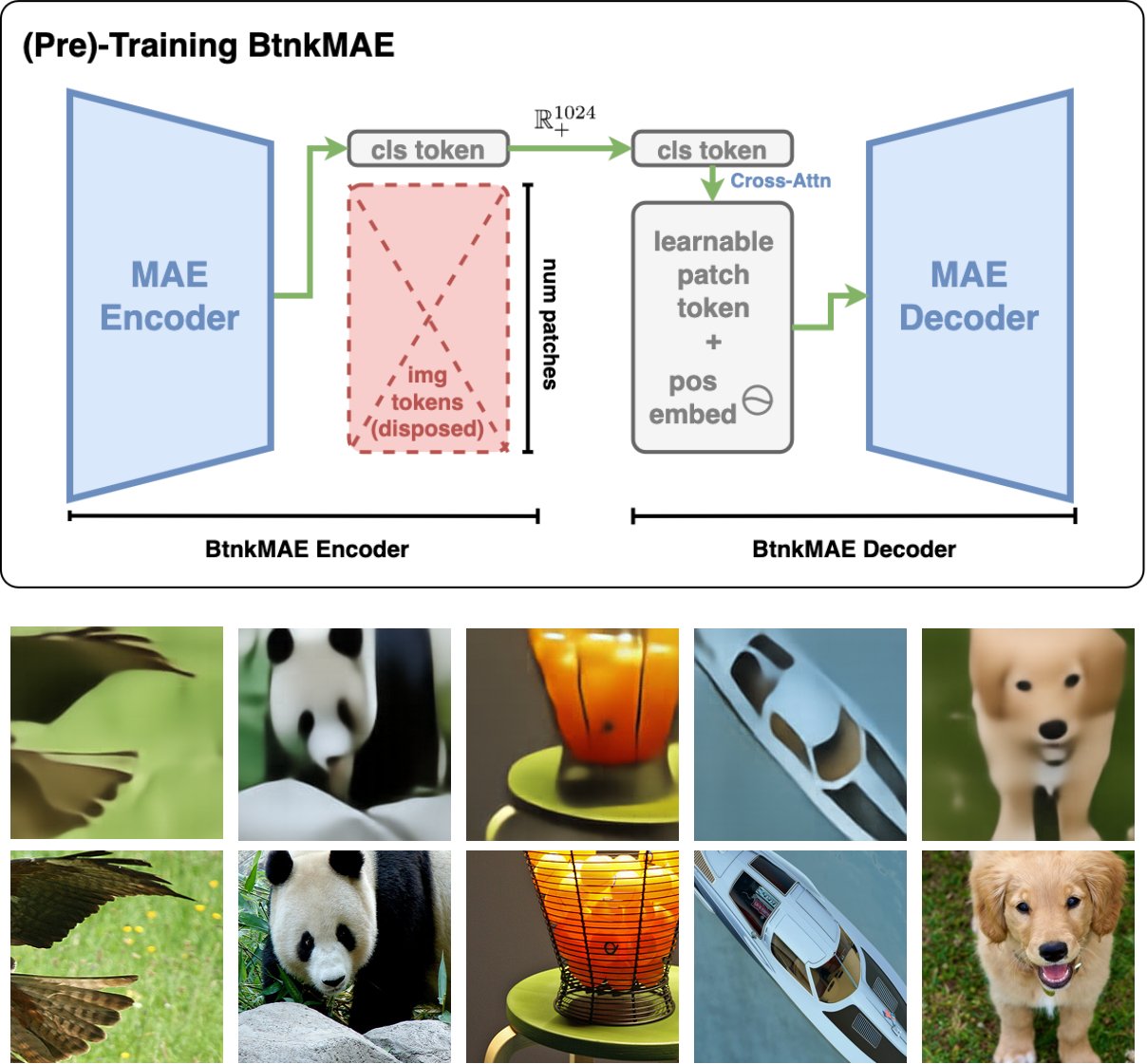
A bottleneck MAE that reduces each ViT frame from a patch-token sequence to a single compact embedding,
then reconstructs images with learned patch queries and cross-attention.
Released ViT-B/L ImageNet-1K checkpoints with configurable DDP/Hydra training and support for
variable-resolution and panorama inputs.
|
|
RatatouGym: GPU-Parallel Multimodal Navigation Simulation
Documentation
/
Source Code
A PyTorch-native simulator that generates model-ready spatial and movement sensory streams from
thousands of concurrent navigation trajectories, tested at 4,096 parallel environments.
GPU-resident trajectory stepping and sensory encoding use batched tensor operations and
torch.compile kernels for recurrent-model training.
|
|
NN4N: Neural Networks for Neurosimulations
Documentation
/
Source Code
A PyTorch package for configurable continuous-time RNNs, including E/I-constrained and multi-area
architectures with direct access to hidden dynamics. Implements sparsity, sign, and per-connection
plasticity masks to enforce structured connectivity and scale gradients during training;
shipped with documentation, tests, and CI.
|
|